
Lexington Crawl Space Water
New homeowners discover widespread standing water in crawl spaces after storms and struggle with the urgency of extraction, vapor barrier installation, and dehumidification. Our certified technicians assess foundation dampness, pump out floodwater, and establish durable drying systems to protect your subfloor.
Call (803) 555-0130 if water is flowing now.
Prefer to talk? (803) 555-0130
Dedicated Moisture Control Specialists
Our family-owned company brings extensive field experience diagnosing substructure dampness and saturated foundations across the Midlands.
As homeowners often describe in neighborhood forums, persistent standing water under a home raises urgent concerns about how quickly moisture can rot structural subfloor joists and foster toxic mold colonies.
A common pattern echoed in public discussions is that standing water continues to flood crawl spaces despite substantial investments in moisture mitigation, bypassing installed encapsulation membranes.
To halt structural decay before wood beams buckle, rely on prompt water extraction and structural restoration services delivered by trained regional technicians.
In many regional subdivisions, negative exterior grading and street runoff between neighboring properties funnel rainwater through foundation walls into crawl space corners.
We thoroughly inspect perimeter footings and framing to verify complete dryness before completing any job.
Systematic Steps To Dry Your Subfloor
Homeowners evaluating ways to manage recurring crawl space pooling debate between interior sump pump basins and exterior foundation trenching to determine the most dependable drainage strategy.
- Thorough Moisture Assessment. Our technicians map substructure saturation and check drainage pathways where perimeter trenches in dirt crawl spaces indicate historic or ongoing surface runoff routing, signaling persistent water intrusion during heavy storms.
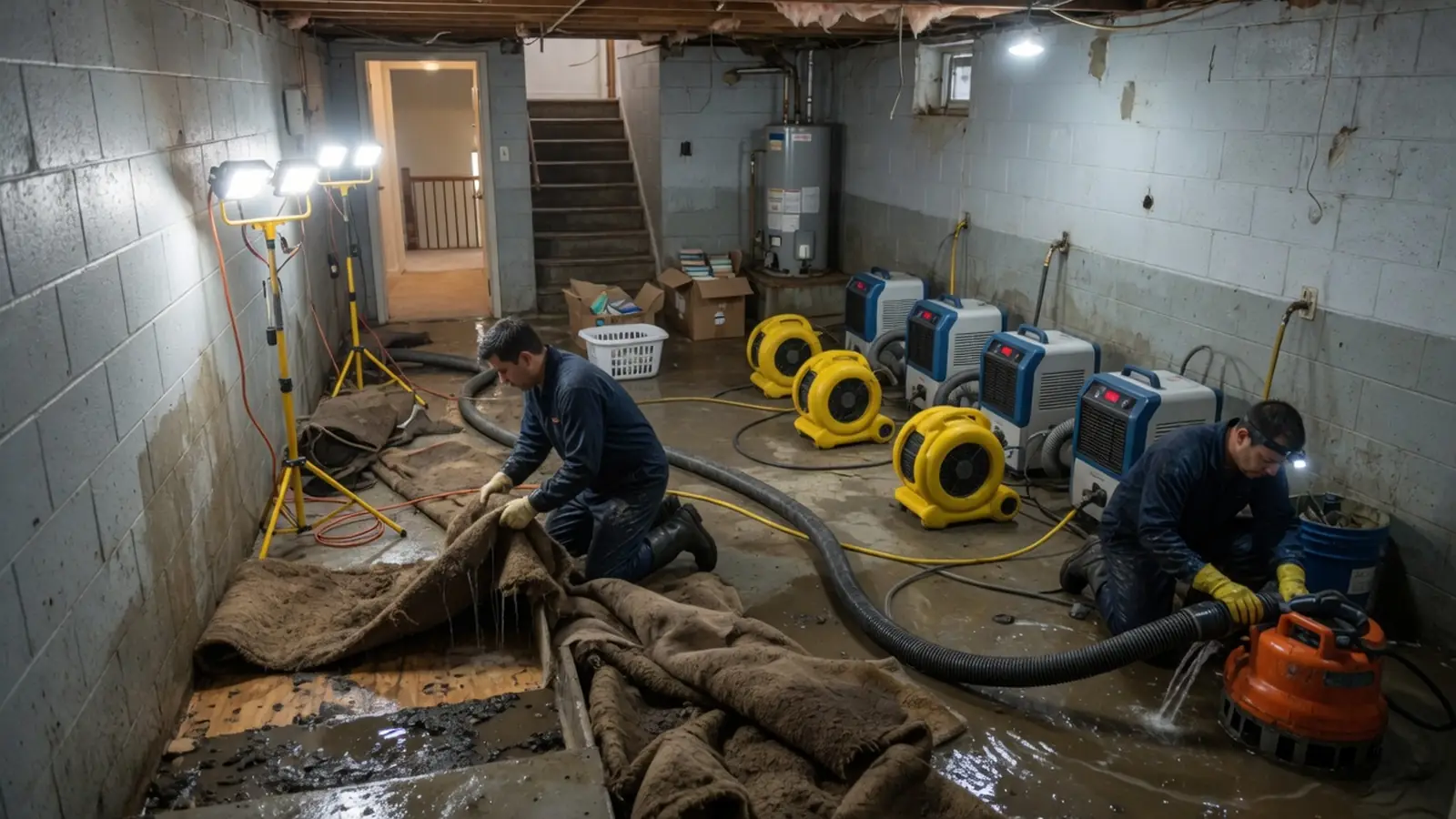
- Complete Water Extraction. Using commercial submersible pumps and truck-mounted extractors, we eliminate standing pools before initiating structural airflow. If heavy downpours caused the flood, learn how we handle severe storm damage restoration to keep your property protected.
- Durable Barrier Encapsulation. Using seamless, non-woven 16-mil vapor barriers prevents ground moisture migration without producing the plastic off-gassing odors common to woven liners. We secure these heavy-duty liners along masonry piers and foundation footings for permanent ground isolation.
- Controlled Environmental Dehumidification. We deploy high-capacity commercial dehumidifiers to stabilize relative humidity under sixty percent. During final sealing, technicians check access hatches because gaps around exterior crawl space access doors allow unconditioned humid air and wind-driven rainwater to bypass foundation encapsulation.
Proven Substructure Protection
We stand firmly behind our substructure moisture protocols by installing heavy-gauge ground shielding, commercial-grade drainage lines, and precision air-drying equipment. When damp conditions trigger fungi growth, discover our professional mold remediation process designed to sanitize framing and protect indoor air quality without harsh chemical residues.
Standing Water Removal
We extract standing pools and mud from foundation troughs using specialized heavy-duty pumps. Our crew sanitizes the soil and frames to halt bacterial contamination immediately.
Subfloor Moisture Remediation
A dryer vent disconnected beneath a home pumps heat and moisture directly into the crawl space, rapidly accelerating mold colonization on subflooring. We dry soaked floor joists and repair compromised duct connections.
Vapor Barrier Installation
We replace torn plastic ground sheets with high-durability membranes sealed tightly against masonry walls. This stops subterranean moisture evaporation and protects flooring from below.
Our Commitment To Complete Subfloor Protection
We approach every flooded crawl space with industrial-grade water extraction tools and rigorous moisture tracking to restore safe, dry structural conditions for your home.
- 12Zip Codes Served
- 6Service Areas
- 3Services Offered
Local property owners share their firsthand experiences with our crawl space water extraction, structural drying, and foundation moisture barriers.
“Six months after heavy downpours flooded our substructure, the area under our floors remains completely dry and scent-free. The crew pulled out gallons of standing runoff and sealed our foundation footings perfectly. We have checked the crawl space after every severe storm since, and the humidity levels have stayed rock steady.”
Marcus B.
“Our neighborhood association flagged our shared driveway drainage after runoff began backing up along the side foundation. The crew walked the property line with our neighbor, set up quiet extraction pumps, and routed all the discharge lines without making a mess. Everyone on our street was genuinely impressed by their courtesy and speed.”
Danielle K.
“Having an elderly parent and two curious rescue dogs indoors made me nervous about loud equipment and open crawl space hatch covers. The team kept the exterior access gate securely latched, placed safety cones near the side yard, and ran whisper-quiet dehumidifiers so my mother could sleep undisturbed. Their thoughtful care throughout the three days made a stressful situation manageable.”
Gregory P.
“A lowball contractor suggested simply laying down thin plastic over muddy ground without pumping the standing water first. This company took the time to explain why trapped moisture would rot our subflooring, then properly extracted every puddle and installed a heavy 16-mil barrier. Paying for real expertise saved us from thousands in future framing repairs.”
Valerie T.
Frequently Asked Questions
How quickly does standing water cause structural damage beneath a house?
Standing water can trigger structural subfloor decay and active fungal spores within twenty-four to forty-eight hours of pooling. Rapid extraction prevents wood rot from migrating upward into subflooring and finished hardwood materials.
What factors influence the total cost of crawl space water cleanup?
Total expenses depend on standing water depth, square footage, mold presence, and the necessity of installing sump pumps or liners. Each property receives a comprehensive site assessment to evaluate structural conditions before any work starts.
Is an interior sump pump better than exterior foundation trenching?
Interior sump pumps address rising groundwater tables beneath homes, whereas exterior trenching intercepts surface runoff before entry. Combining perimeter drainage channels with an automatic discharge basin ensures complete protection against recurring water accumulation.
Why should crawl spaces use non-woven vapor barrier liners?
Non-woven sixteen-mil liners prevent soil vapor entry while eliminating the offensive chemical off-gassing smells of woven plastics. Seamless membranes remain tear-resistant when technicians enter for regular maintenance checks.
How long does it take to completely dry a wet crawl space?
Complete structural drying typically requires between three and five days of continuous heavy-duty dehumidification equipment operation. Technicians monitor wood moisture percentages daily until framing drops safely below normal moisture thresholds.