
Water Damage Restoration Lexington SC
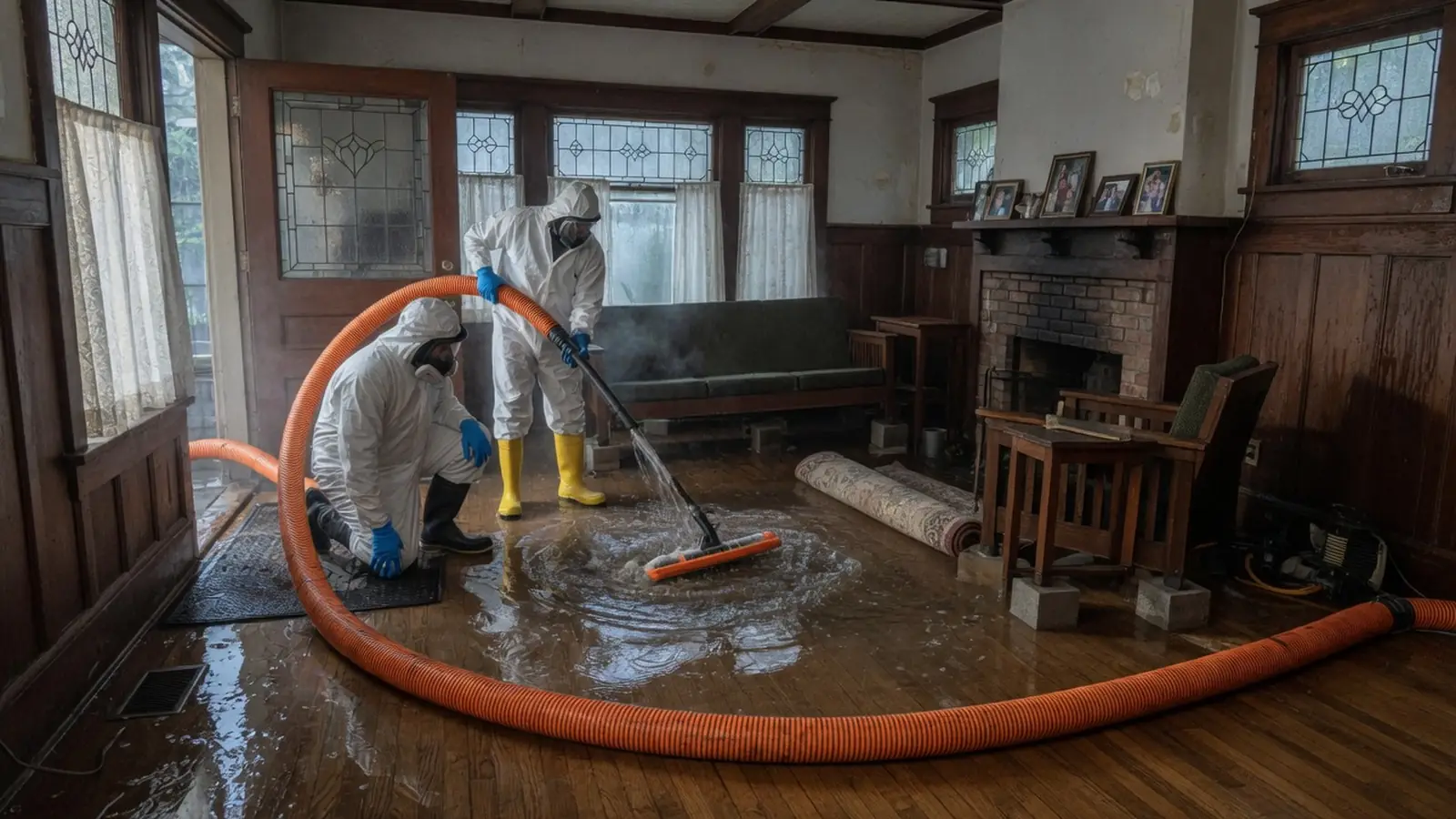
Intense downpours from stalling summer storms frequently overwhelm perimeter swales, pushing wind-driven runoff past slab edges and entry thresholds before gutters can discharge. Our emergency restoration crews deploy truck-mounted extractors and commercial desiccant dehumidifiers to stabilize flooded properties immediately. We protect structural framing from secondary microbial damage with around-the-clock moisture monitoring.
Water still running? Call (803) 555-0130.
Prefer to talk? (803) 555-0130
Dedicated Moisture Mitigation Experts
The dominant mapped soils across the regional soil survey (SC063) by acreage are Lakeland soils, undulating; Blaney sand, 2 to 10 percent slopes; Lakeland sand, 6 to 15 percent slopes; Fuquay loamy sand, 0 to 6 percent slopes.
The single most extensive soil unit mapped around our service area is Lakeland soils, undulating, covering about 98,213 acres of SC063.
About 3% of housing units in our coverage zone (264 of 9,820) were built before 1960, the era of galvanized steel supply lines and cast iron drains.
About 16% of housing units in the district (1,542 of 9,820) were built in the 1970s and 1980s, overlapping the years polybutylene supply piping was commonly installed.
About 20% of housing units across the community (1,995 of 9,820) were built before 1980, the period when asbestos-containing materials and lead paint were still in use.
A pattern echoed in public discussions is that heavy seasonal downpours cause recurring basement water intrusion, leaving homeowners uncertain whether to regrade the exterior or install interior sub-slab drainage.
When severe weather strikes, our emergency teams deploy rapidly to mitigate severe exterior storm damage and protect building structural integrity.
Our technicians conduct systematic moisture inspections daily to guarantee your living spaces dry out safely and thoroughly.
Our Four Step Water Removal Workflow
When sudden water breaches an indoor living space, rapid mitigation determines whether materials can be preserved or must be removed. We implement an engineered restorative drying sequence to extract moisture, protect structural boundaries, and verify dry standards.
- Emergency Inspection And Moisture Mapping. We inspect structural boundaries using non-invasive moisture meters and infrared cameras to trace water paths behind walls and beneath baseboards. Homeowners often describe how new homeowners discover widespread standing water in crawl spaces after storms and struggle with the urgency of extraction, vapor barrier installation, and dehumidification. Our technicians immediately document ambient relative humidity and establish baseline drying standards.
- High-Volume Water Extraction. Our crews utilize weighted sub-surface extractors and submersible pumps to pull standing water out of subflooring, carpets, and foundations. For properties experiencing lower-level seepage, we initiate specialized crawl space water extraction and drying to halt capillary moisture rise before it damages subfloor joists.
- Industrial Evaporation And Dehumidification. We position high-velocity centrifugal air movers along perimeters to lift bound water out of structural studs and concrete slabs. Heavy-duty Low Grain Refrigerant dehumidifiers continuously pull vapor from the air, maintaining low vapor pressure to accelerate evaporation without warping wood.
- Antimicrobial Wash And Equilibrium Verification. Technicians apply botanical antimicrobial washes to prevent microbial proliferation across affected structural cavities. We conclude every mitigation project with psychrometric data logs confirming all framing materials have returned to dry equilibrium.
Certified Restorative Drying Standards
Every water loss presents unique structural challenges depending on soil moisture load and building envelope construction. In our service region, NOAA radar recorded 496 hail signatures within about 15 miles between 2021-2025 (2021: 88, 2022: 213, 2023: 54, 2024: 62, 2025: 79), creating hidden roof penetrations that channel rainwater down interior wall cavities. The heaviest recent hail year around our area was 2022, with 213 radar hail signatures inside a 15-mile radius. We hold our crews to rigorous IICRC S500 standards, ensuring structural integrity is restored without shortcuts. Whenever microbial amplification is detected behind saturated insulation, our certified technicians execute a thorough professional mold remediation protocol to safeguard indoor air quality.
Structural Flood Extraction
Rapid extraction of standing water from hardwood flooring, saturated drywall, and carpeted rooms following sudden pipe bursts or seasonal intrusion. We deploy high-capacity suction pumps to remove standing water within hours.
Crawl Space Encapsulation Drying
Specialized mitigation for subterranean crawl spaces suffering from high relative humidity, mud accumulation, or standing water. Homeowners evaluating ways to manage recurring crawl space pooling debate between interior sump pump basins and exterior foundation trenching, and we provide complete moisture remediation.
Sewage And Sump Backup Remediation
Sanitizing extraction and controlled tear-out for properties contaminated by drain backups, black water, or pump station failures. We extract contaminated water, apply hospital-grade antimicrobials, and remove non-salvageable materials safely.
Our Commitment To Precision Structural Drying
We approach every water intrusion with scientific psychrometry and honest craftsmanship. Our technicians prioritize structural preservation over unnecessary demolition, keeping your restoration costs controlled while returning your home to a completely safe and dry state.
- 12Zip Codes Served
- 6Service Areas
- 3Services Offered
Read direct feedback from local property owners who experienced our structural drying and emergency extraction services firsthand.
“Our downstairs bathroom line ruptured late on a Sunday evening. The crew arrived with industrial extractors within forty minutes and had the standing water pulled before midnight. Their rapid weekend response saved our subfloors from buckling.”
Marcus T.
“Every single afternoon before packing up, the crew swept the work areas and neatly taped down all the power cords. They stacked the drying equipment out of our family walkways so our kids could safely get through the house. It made living through a major dry-out so much easier.”
Brenda K.
“I received time-stamped moisture meter photos and clear text summaries twice a day while at work. The team outlined exact structural drying percentages without me ever having to call to ask what was happening. That proactive honesty gave our family total peace of mind.”
Devin R.
“Instead of prematurely ripping out our entire hardwood hallway, the technicians used specialized injectidry mats and saved the flooring. They clearly explained how drying the planks in place preserved our original oak while keeping repair costs low. The end result was completely dry and perfectly flat.”
Valerie P.
Frequently Asked Questions
Why is there standing water on top of my crawl space vapor barrier after heavy rain?
Standing water collects on crawl space vapor barriers when rising groundwater or perimeter runoff seeps over the plastic liner. This issue occurs when surface drainage cannot escape permeable ground, requiring pump extraction and proper sub-grade perimeter trenching.
Can consumer fans and shop vacs prevent mold after a failed sump pump floods drywall and carpet?
Consumer shop vacs and household fans cannot thoroughly dry saturated drywall or carpet padding fast enough to stop mold growth. Flooding from failed sump pumps saturates drywall and carpeting, leaving owners unsure whether consumer fans and shop vacs can prevent mold or if professional restoration tear-out is required. Professional commercial air movers and commercial desiccant dehumidifiers are required to pull trapped bound moisture from structural framing.
How does rising groundwater hydrostatic pressure force water through foundation cracks?
Intense rainfall saturates surrounding soil, generating hydrostatic pressure that pushes groundwater through foundation cracks. Rising groundwater hydrostatic pressure forces water through foundation cracks following intense rain, prompting questions about sump pump and French drain solutions. Relieving this pressure requires targeted interior pressure-relief basins or exterior perimeter drainage.
How long does the structural drying process typically take after indoor flooding?
Professional structural drying typically takes between three to five days depending on material saturation and airflow volume. Technicians monitor dry standards daily with calibrated moisture meters until structural wood and sheetrock return to baseline equilibrium levels.
Why do plumbing age and pipe materials affect restoration protocols in older homes?
Older supply lines and vintage building materials require specialized safety testing and careful demolition during water extraction. Homes with older components demand careful environmental handling so disturbed materials do not cross-contaminate living areas.